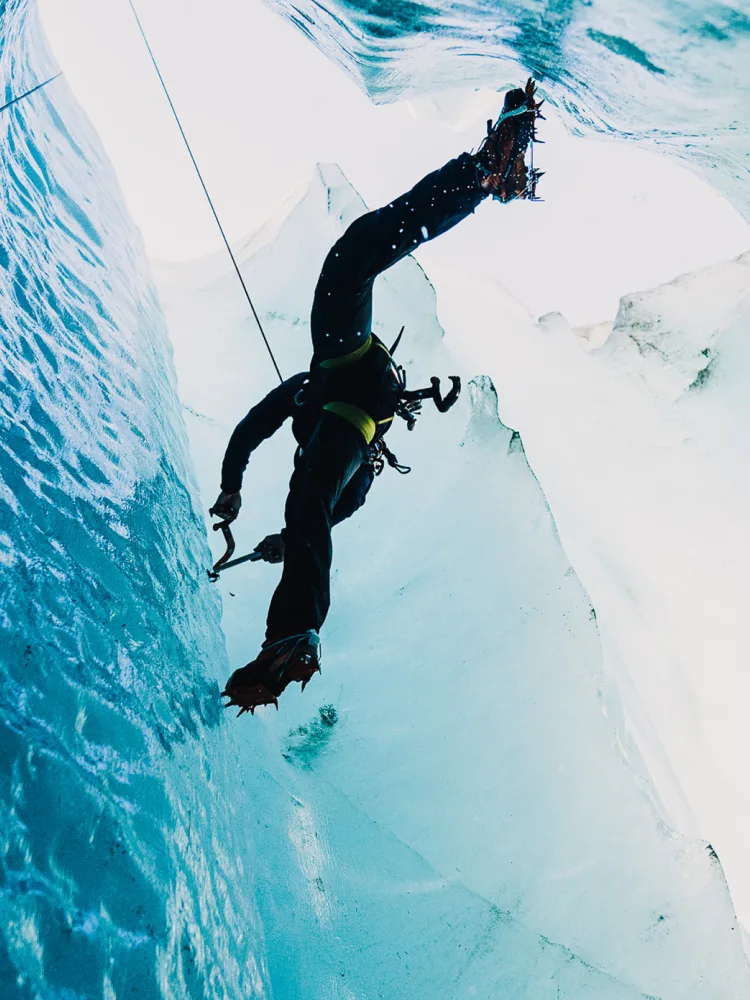
Becoming a mountain guide
In this series, we’ll follow Haglöfs ambassador Arthur Poindefert as he undertakes the steep but rewarding journey of becoming a certified mountain guide.
Chapter 1: Testing motivation and technical knowledge
Climber and Haglöfs Ambassador Arthur Poindefert has been dreaming of becoming a mountain guide since he was 14 years old. The catalyst: a climbing tour on Mont Blanc together with his dad and twin brother. Following in the footsteps of the experienced mountain guide, Arthur quickly found himself captivated by the high mountain environment: “He took me into the unknown, surpassing myself, and showed me the most beautiful nature there is.” Arthur has been seeking high-mountain adventures ever since. His climbing passion turned into a career aspiration after attending the Chamonix Valley High School for Mountain and Climbing Sports Studies. This is when he decided to embark on a certification path to become a professional mountain guide and share his passion with others—just as his instructors had done with him.
What is it about becoming a certified mountain guide that appeals to you?
“Still quite young in the world of high mountains, I aspire to climb increasingly difficult routes in the massif and abroad, and being a professional guide would allow me to maintain a balance between pursuing my high-level sports projects and keeping my feet on the ground by guiding on more accessible routes. Living off one’s passion is a dream, and this dream would become a reality if I could live off my high-level sport on one side, and guide, share, show, and raise awareness on the other.”
How does one become a mountain guide?
“Becoming a mountain guide requires passing a demanding and exciting training course. In France, the State Diploma of Mountaineering and High Mountain Guide (DEAGM) is the essential key to exercising this profession. Issued by the National School of Skiing and Mountaineering (ENSA), it is obtained after demanding theoretical and practical training, spread over several years.”
Where are you in the process now?
“I'm currently taking selection tests to get into the course. At this stage, you must pass a probationary exam assessing your technical knowledge and motivation. In the winter, two days of testing are dedicated to oral motivation and evaluation of the course list and its proper completion. Then there’s a ski touring test where you must complete 1,500 meters of ascent in a set time and are graded on two off-piste ski runs. In the summer, a full week of testing is devoted to an orienteering course, including a day on varied terrain (running in scree, downclimbing in mountain boots, etc.), a climbing test (two on-sight routes of medium level 7a), and an evolution test on glacier terrain. “If we pass each test day after day, we spend a week in the mountains with the school’s instructors who evaluate our experience and our ease of evolution in the high mountain terrain. This is the last test before officially becoming an aspiring mountain guide and being accepted into the training course. “I passed the tests this winter and am now preparing for the summer tests, which will allow me to start training for the first course next September! It's a course that's going to require a lot of commitment—it takes at least four years to complete.”
What do you expect the most difficult part of the training will be?
“The most difficult part of mountain guide training is subjective and depends on the individual. However, several aspects of the course are particularly demanding: The length and intensity of the training, taking on responsibility and managing stress, and the entrance tests. “Becoming a mountain guide is difficult, and in some ways very similar to going to engineering school. The hardest part is the years spent preparing for the entrance tests for courses such as the competitive entrance exams for the top engineering schools. Then, once you're accepted into the course, it's a relief. You have a longer-term vision, but you must remain professional and keep learning until you have the diploma.”
The most exciting part?
“All the aspiring mountain guides are grouped into classes and come together for four weeks, some of us as boarders. So, there will be plenty of time for camaraderie and laughter! The most exciting thing is being together with everyone and sharing the same objective at the top: learning skills that will be indispensable to us as mountain guides which we don't have as ordinary mountaineers.”
Chapter 3: Elevating the fundamentals
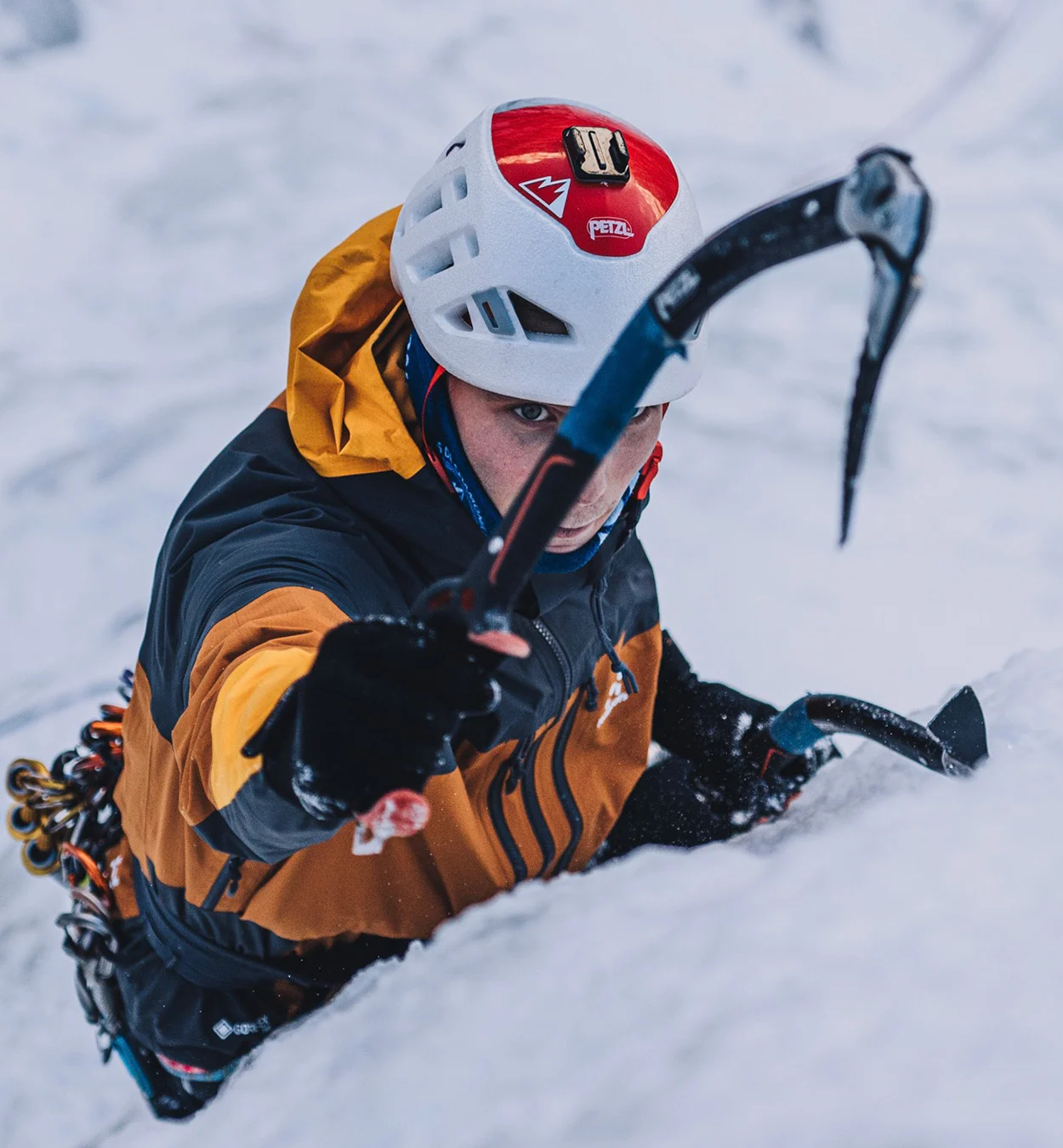
Once the exhilaration of passing his tests and being officially admitted to the mountain guide course settled, it was time for Arthur Poindefert to return to the basics. His mountain guide fundamentals course kicked off in September, and the stakes remain high: each course Arthur completes grants him a new professional license to practice.
In his latest update, Arthur offers a glimpse of his rigorous training schedule and shares some of the ways he keeps himself motivated along this physically and mentally demanding journey.
Hey Arthur, training officially started in September. What was it like?
"We covered all of the basics of mountaineering except for skiing. It was four intense weeks with a new theme each week. By the month’s end, we’d gone from being amateurs and friends in the mountains to professionals managing groups and people in the high mountains. Very, very interesting.”
What were the four themes?
“The first week, we covered fundamentals and rope techniques. The second week was ‘Orienteering week’, and we learned how to create a route in the high mountains on a map with a compass. The third week was ‘Externalized week’ during which we were put into groups of three to four people to climb all over France with an instructor. Finally, in the last week, we focused on teaching climbing and had to manage a climbing session with a child. To complete the month's training, we held a final orienteering race in addition to each week's marks, which we absolutely had to pass.”
How did February’s training differ from September’s?
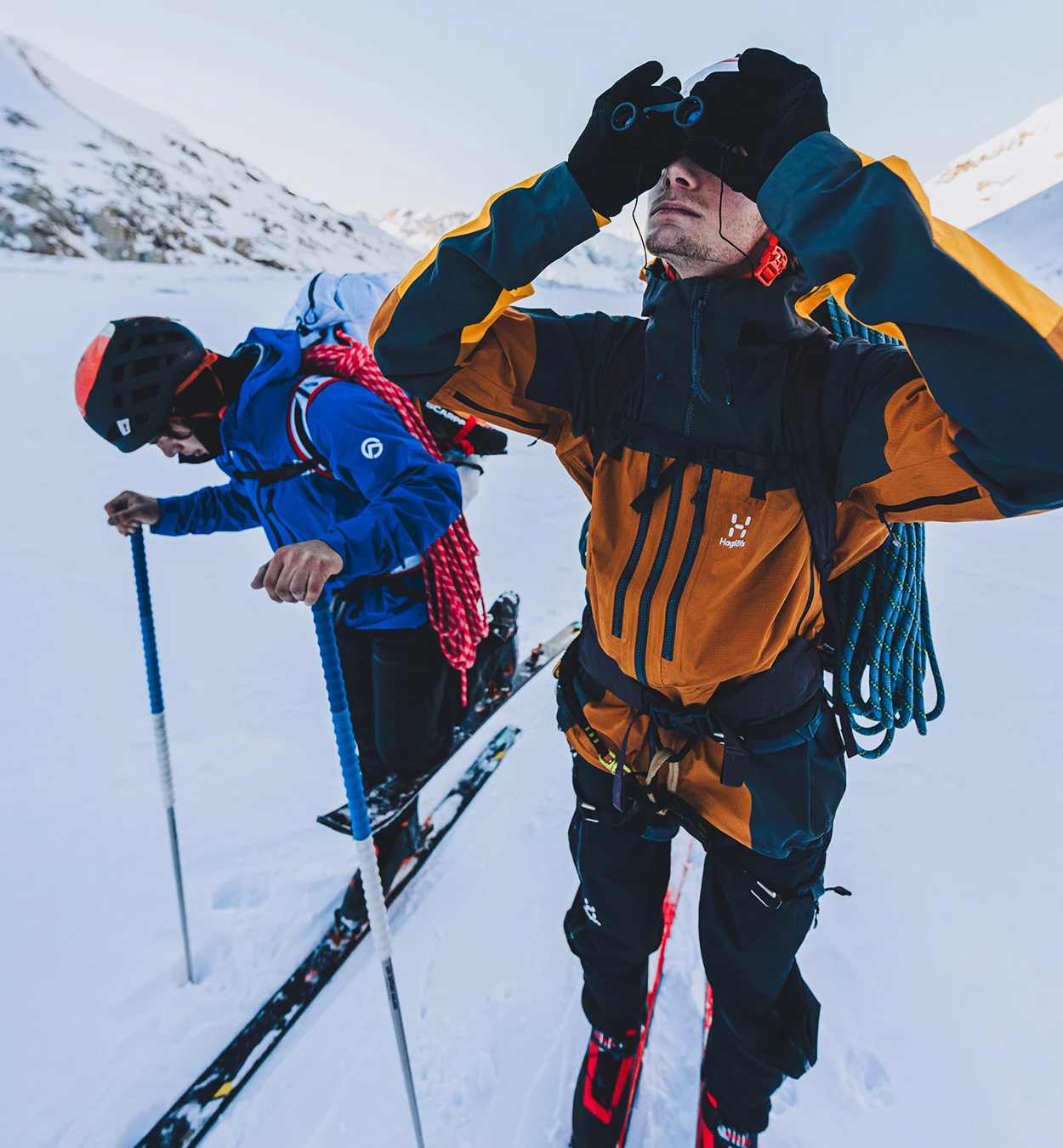
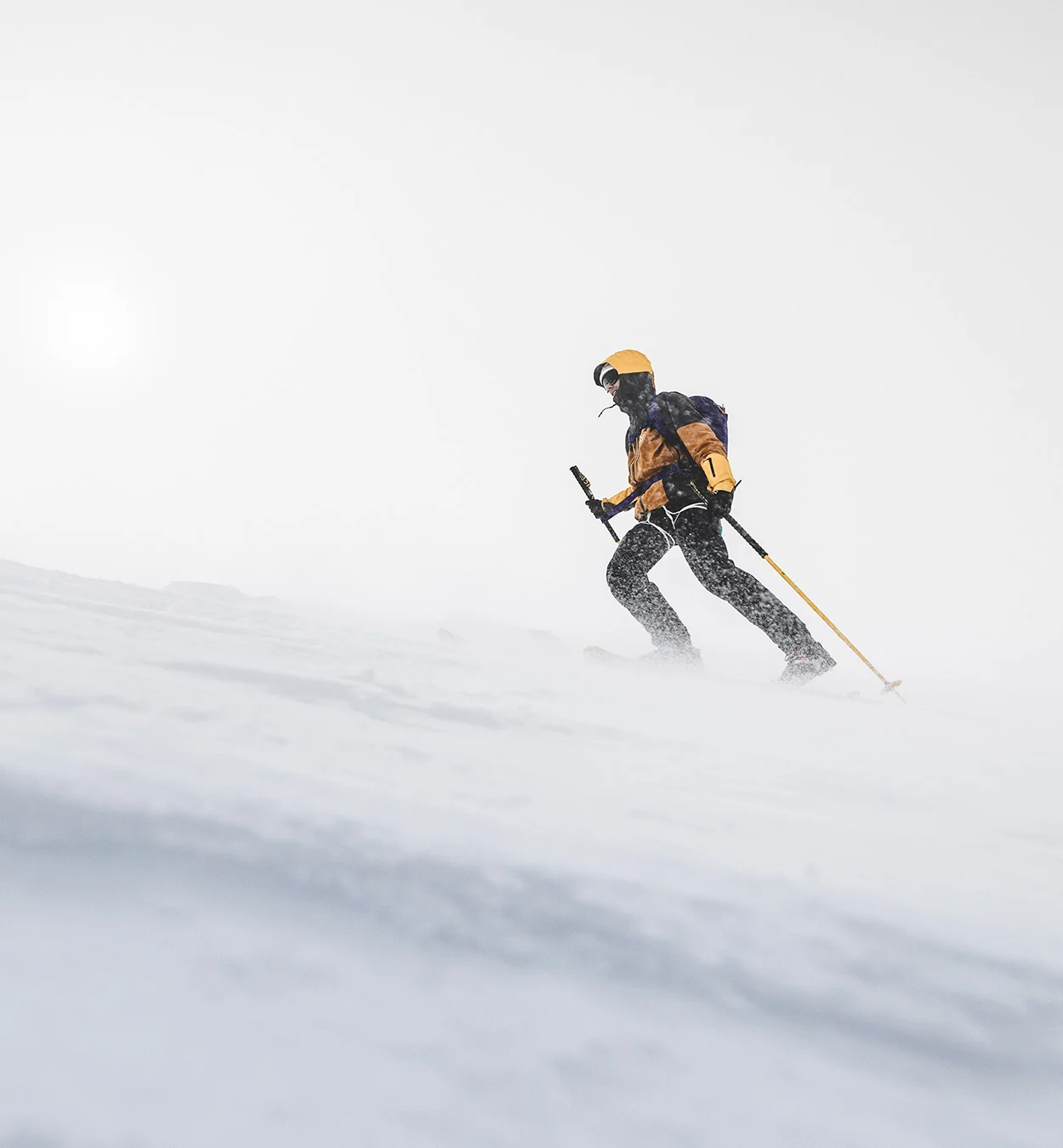
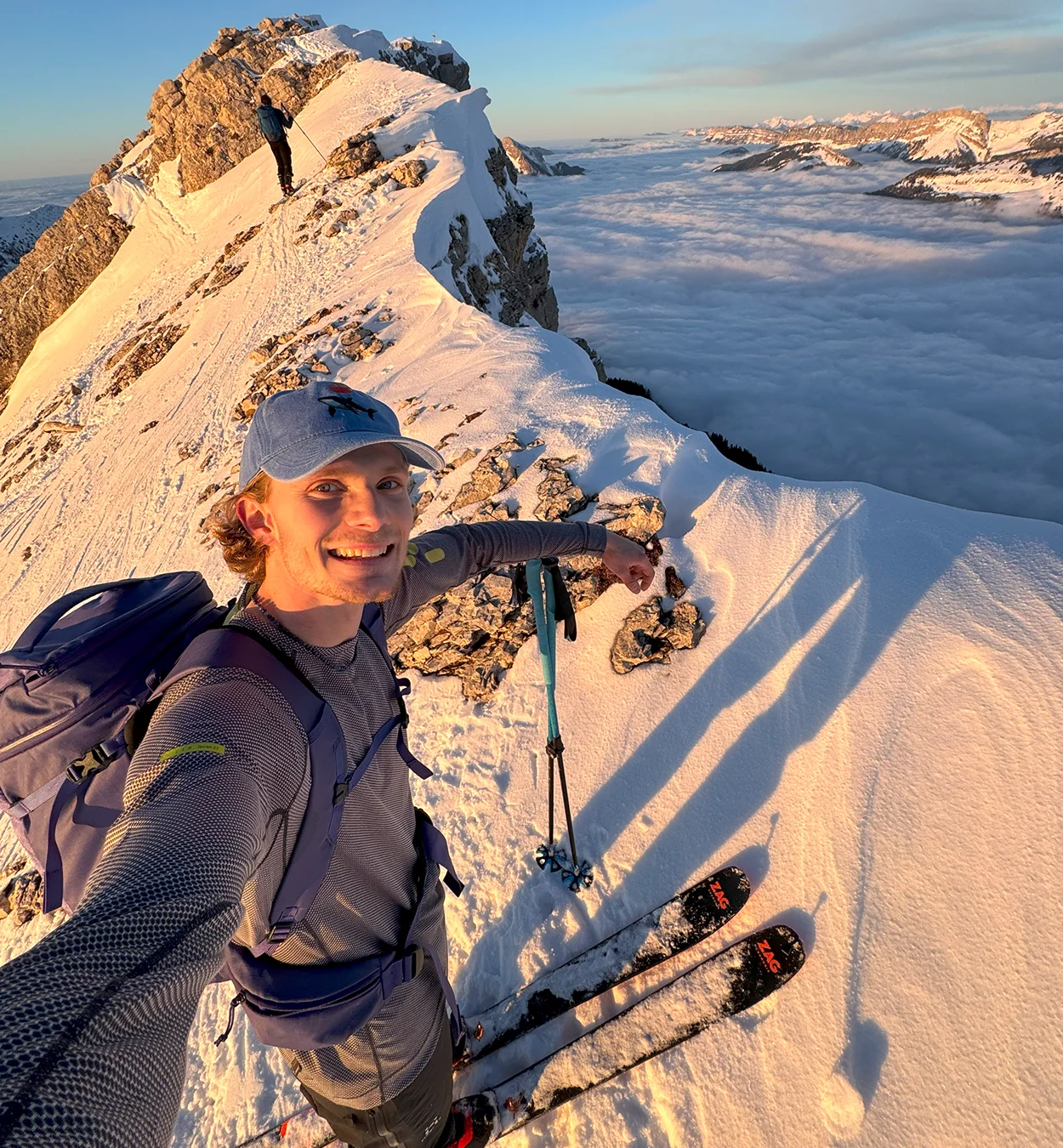
“It was basically the same thing as the autumn, but in a winter environment with specific training related to snowpack, the risks of avalanches, and group management on skis.
“February’s training centered around three main themes: snow conditions, avalanche risk, and group leadership in off-piste, glaciated, and non-glaciated terrain. Each week, we had a new team of four to five aspiring guides, with a teacher-guide often working in pairs with another team.
“From the very first day, we had to pass an exam in less than eight minutes or risk missing the whole month's training. We had to get two Arvas (avalanche transceivers) out of the snow in a typical avalanche situation with multiple victims. The week continued with group instruction and theory classes in the morning before heading out into the field.
“In the second week, we put some of the group techniques we’d learned into practice with a very interesting contribution from two snow experts who were with us in the mountains that week. The knowledge we gained from studying snow was enormous.
“We also learned how to build Siberian shelters (igloos for simplicity's sake) and slept in them, beforehand, next to the refuge des prés above Les Contamines.
“Finally, the third week was a global exam week, during which we traveled in teams to foreign massifs (Italy, Switzerland, France). Each teacher let us manage the group, find the itinerary, and gauge the risks on the way up and down. We climbed some stunning peaks, including Mont Ruitor in Italy's Val Grisenche.”
What’s coming up next?
“June will be a month of overall group management with real clients. The goal is to ensure that we have the skills needed to start working as guides in July while still in training.”
It sounds exciting, and also like a lot of hard work. How are you feeling?
“I'm very happy to be able to continue my studies to become a mountain guide with my mountaineering and climbing at a high level. Sometimes I get tired from the accumulation of projects, but I love the challenge of taking them on, listening to myself, and keeping myself motivated on a daily basis.”
What is one of the ways you keep yourself motivated?
“I gain a lot of inspiration in my practice from my mentors, whom I'm lucky enough to be partly coached by in my national team. Léo Billon and Charles Dubouloz are clearly two immense mountaineers who forged the vision I have of mountaineering today: technical, light, fast, and free climbing.
“I've also been lucky enough to join the GEAN (Groupe d'excelence d'alpinisme nationale), which will enable me to progress with the best towards a sporting career in complete serenity, with an expedition at the end.”
Follow Arthur’s journey to becoming a mountain guide @haglofs @arthur_poindefert